

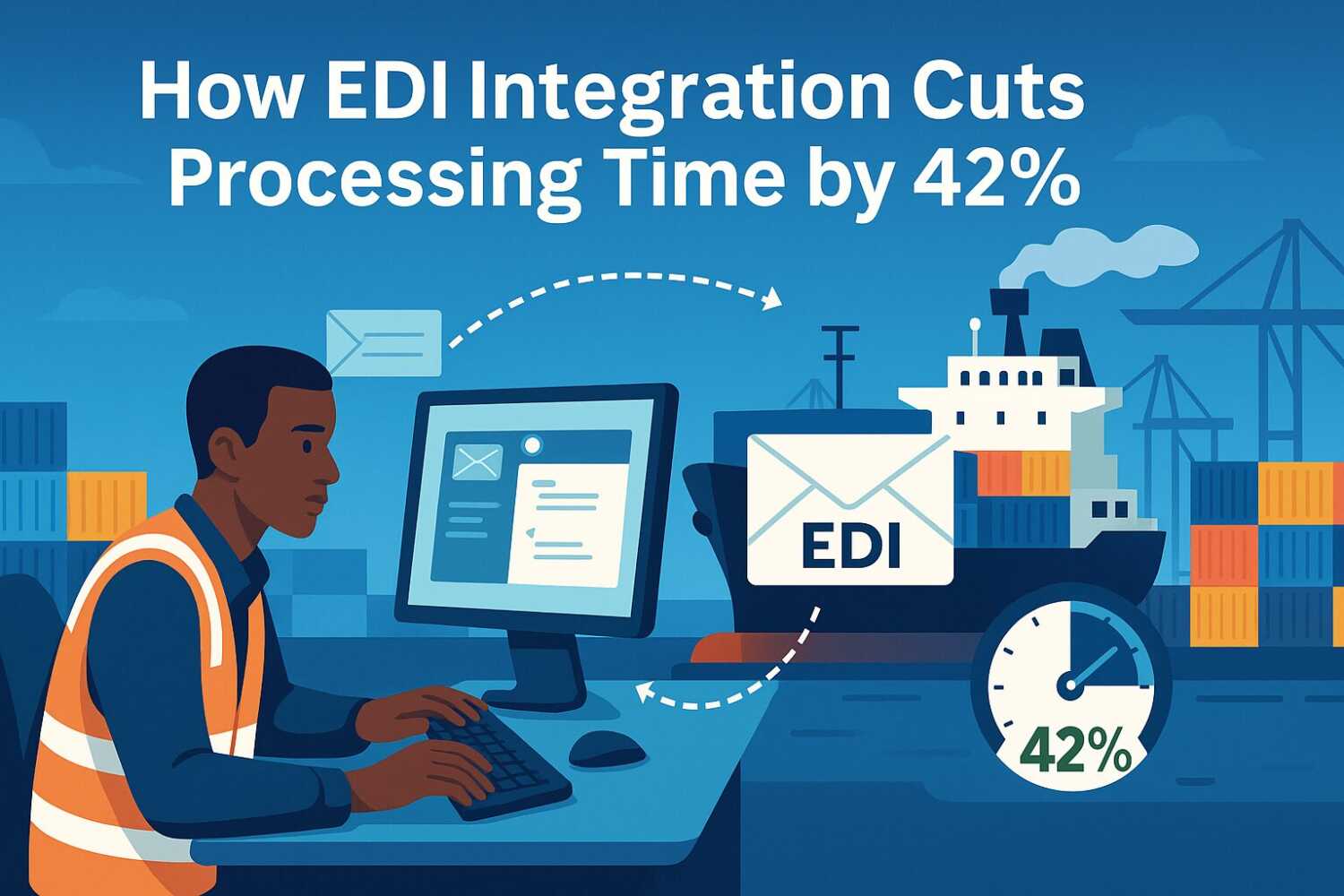
EDI Integration for Container Depots: Where the Time Savings Come From
EDI integration is usually discussed as a technical project, but in a container depot the real value is operational. It removes repeated typing, gives planners earlier status, and reduces the number of calls between the gate, yard, customer service, and shipping-line teams. For depots that still rely on emails, PDFs, and spreadsheet updates, even a focused EDI rollout can change the rhythm of the day.
Where manual processing slows the depot
Most delays do not come from one dramatic failure. They come from small manual checks repeated hundreds of times: container number validation, gate-in confirmation, release status, damage notes, booking updates, and customer instructions. When each update is copied from an email or retyped into a container yard management system, errors are inevitable.
The result is familiar: dispatchers wait for confirmation, gate staff call the office, customer service checks with operations, and billing receives incomplete event data. EDI helps by making core container events flow directly between systems.
A practical example: gate events through CODECO
One inland depot handling import and export containers used to process shipping-line updates manually. Gate-in and gate-out events were confirmed by email, then entered into the depot system by operators. During peak periods, updates lagged behind the physical move, so the yard map and customer status were not always reliable.
The depot introduced EDI for standard gate events, using CODECO messages between the shipping-line environment and its CYMS. The first phase was deliberately narrow: receive container movement data, validate it against booking and inventory records, and write the event into the operational history without another manual step.
What changed after integration
The biggest improvement was not just speed. It was confidence in the data. Operators no longer had to decide whether an email, spreadsheet, or phone update was the latest source of truth. Gate events arrived in a consistent format and were attached to the container record automatically.
- Faster processing: routine container status updates moved from manual handling to near real-time system events.
- Fewer typing errors: container numbers, booking references, and movement times were no longer re-entered by several people.
- Better yard planning: dispatchers could allocate equipment using current gate and release data.
- Cleaner customer updates: customer service worked from the same status as operations instead of chasing confirmations.
- More reliable billing: billable events were easier to trace because timestamps came from the operating workflow.
Start with the messages that affect daily work
EDI does not need to begin with every partner and every message type. A practical first stage usually covers the events that create the most manual effort: gate moves, release confirmations, loading or discharge data, and shipping instructions. Once those records are stable, the depot can expand into additional message formats such as COARRI, IFTMIN, or customer-specific API connections.
What to check before implementation
Before starting, confirm which system owns each event. Decide how exceptions will be handled, who reviews rejected messages, and how duplicate or conflicting updates will be logged. The integration should support operations, not create a hidden technical queue that only one person understands.
A good container depot software platform should provide message monitoring, validation rules, error logs, and clear links between the EDI event and the container history. That is what turns integration from a technical connector into a useful operating tool.